
UPS and Inverter Comparison
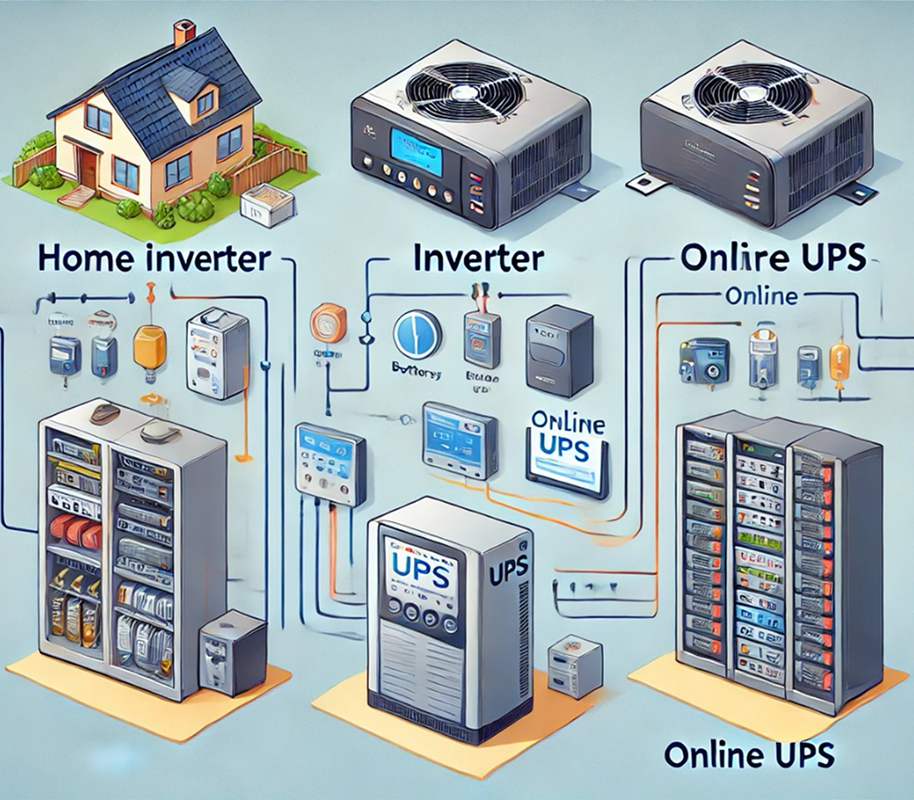
UPS and Inverter Comparison
1. UPS Inverter / Online UPS Inverter
- Converts DC (battery power) to AC (usable electricity)
- Takes a few milliseconds to switch during power outages
- Ideal for home and small office use
- Lower cost compared to UPS
How It Works:
When grid power is available, the inverter charges the battery. During a power outage, it switches to battery power (with a slight delay).
Best For:
🏠 Homes, small offices, and shops needing backup for lights, fans, and basic appliances.
2. UPS (Uninterruptible Power Supply)
- Provides instant power backup with no delay
- Protects sensitive electronics (e.g., computers, servers, medical equipment)
- Shorter backup time compared to inverters
- Higher cost but offers superior protection
Types of UPS:
- Offline/Standby UPS – Switches to battery power within milliseconds during an outage. Best for home PCs.
- Line-Interactive UPS – Regulates voltage fluctuations and offers better protection. Used in offices and small businesses.
- Online UPS (Double Conversion UPS) – Provides continuous power without any switching delay. Used for critical applications.
Best For:
💻 IT infrastructure, medical equipment, and mission-critical applications requiring zero downtime.
3. Online UPS (Double Conversion UPS)
- Provides continuous power without switching delay
- Converts AC to DC and then back to AC for a pure, stable output
- Best for high-end equipment requiring constant, clean power
- Higher cost due to advanced technology
How It Works:
The Online UPS continuously converts incoming AC power to DC and then back to AC. Ensures a completely stable power supply, free from voltage fluctuations.
Best For:
🏢 Data centers, hospitals, telecom infrastructure, and industries where uninterrupted power is critical.
Which One Should You Choose?
- For home use – Go for an Inverter or a Standby UPS for computers.
- For offices and small businesses – A Line-Interactive UPS offers better protection.
- For mission-critical applications – Online UPS is the best choice.

944 300 4447

